- Updated Date

Mohamed HabbatAuthor

Revolutionizing Real Estate Investments with Tokenization: A Practical Guide
Share:



Let's get practical and solve real-world use cases by leveraging blockchain technology. In the real world, specifically, in the realm of property investment, the steep price tag of properties often limits opportunities for investors, particularly retailers. but how can we level the playing field and offer people around the world the opportunity to participate and invest in a real state? I think you heard about tokenization maybe as well you understand the concept but do you know how it can be implemented?
Real Estate Investment Reimagined
Consider a scenario where a flat is too expensive for a single individual to purchase. In such a situation, a group of friends or investors can pool their resources to buy the flat. This collective investment can then be managed in a way that allows each participant to share in the income proportionally to their contribution.
The Power of Blockchain in Real Estate
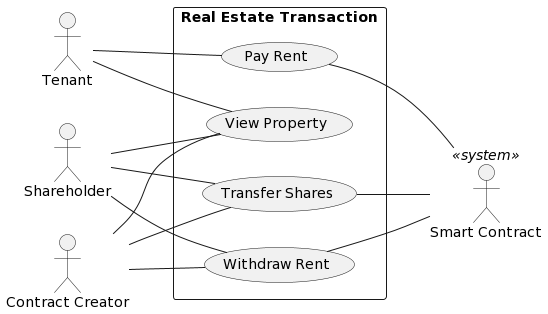 Blockchain technology and smart contracts provide a solution to this scenario. We can program our smart contract to enable the owner to generate a specific quantity of a token, let's call it RES (Real Estate Share). These tokens represent the shares of their property and provide rights or privileges to their owners. In essence, we have tokenized the asset, in this case, the property or apartment.
A crypto token is a representation of an asset or interest that has been tokenized on an existing cryptocurrency's blockchain. Crypto tokens and cryptocurrencies share many similarities, but cryptocurrencies are intended to be used as a medium of exchange, a means of payment, and a measure and store of value. investopedia
We add another functionality to our original smart contract which allows the buyer (tenant) to pay the rent directly to a smart contract address associated with the apartment. This rent can then be withdrawn by any shareholder at any time, in proportion to the number of shares they hold.
Dynamic Investment Structures with Smart Contracts
The contract creator (the property owner), for instance, could start with 100 shares (100 RES) of the apartment. These shares represent ownership stakes in the property and can be transferred to other co-investors as needed. This flexibility allows for dynamic and fluid investment structures that can adapt to the needs of the investors.
Payments, including rent, can be made in cryptocurrency such as ETH or ADA, and deposited directly into the apartment contract. This provides a seamless and efficient transaction process, reducing the need for intermediaries and traditional banking systems.
Both the owner and shareholders can withdraw resources paid as rent. However, safeguards are in place to ensure that only legitimate shareholders can make withdrawals. Any attempt to withdraw by a non-shareholder will be automatically reverted by the smart contract.
Shareholders can withdraw resources proportional to their share, ensuring a fair distribution of income. However, the smart contract is designed to prevent any individual from withdrawing more than their entitled share.
Withdrawals can be made multiple times, provided there were incomes in between. Each withdrawal is calculated against new income, not the total balance, ensuring an accurate and up-to-date distribution of funds.
When shares are transferred, the current funds of both parties are withdrawn. This ensures that each party receives their due share at the time of the transfer, maintaining the integrity of the investment.
Conclusion
If you've made it this far, I'm sure you now have a solid grasp of how tokenization can be leveraged to tackle real-world challenges, and the advantages that blockchain technology offers by sidelining the middleman.
At Bi·Catalyst, we specialize in engineering and developing custom software tailored to your unique needs. If you have an idea you want to bring to life, don't hesitate to get in touch. with us, and let's transform your vision into reality. Your journey to bespoke software solutions begins here with Bi·Catalyst.💡