- Updated Date

Mohamed HabbatAuthor

Overcoming Web3 Authentication Challenges with FIDO PassKeys Innovation
Share:



Challenging the Status Quo of User Authentication
In the world of Web3, the reliance on traditional security mechanisms like passwords, email pin codes, 2FA via sim cards, and Google Authentication seems out of place. These are hallmarks of a centralized Web2 user experience that Web3 aims to transcend. The essence of Web3 lies in its decentralization, and any attempt to enhance its user experience must not revert to the centralized norms of Web2.
The Current State of Web3 Transactions: A Muddled Landscape
Web3 and DeFi, as they stand today, are mired in complexity and risks that make mainstream adoption challenging. The architecture of traditional L-1 platforms often results in transactions that are hard to comprehend and execute for the average user. But is Radix's approach the definitive answer, or does it introduce new complexities under the guise of simplification?
The Problem with Passwords
Traditional authentication methods, such as passwords, emails, and 2FA, have long been the Achilles' heel of online security. They are cumbersome, prone to breaches, and often a gateway for unauthorized access. Web3, with the introduction of ROLA, is set to turn this narrative on its head.
ROLA's: A Decentralized Attempt and user-friendly experience?
As of December 15, 2023, following the Babylon release, Radix introduced ROLA (Radix Off-Ledger Authentication). ROLA aims to provide a decentralized method of authenticating users’ claims in dApps, leveraging the capabilities of the Radix Network. It's designed to verify control over an Identity or Account component within the network, using cryptographic proofs. The question arises: does ROLA successfully navigate the fine line between user-friendly authentication and the non-negotiable principle of decentralization in Web3?
Understanding ROLA
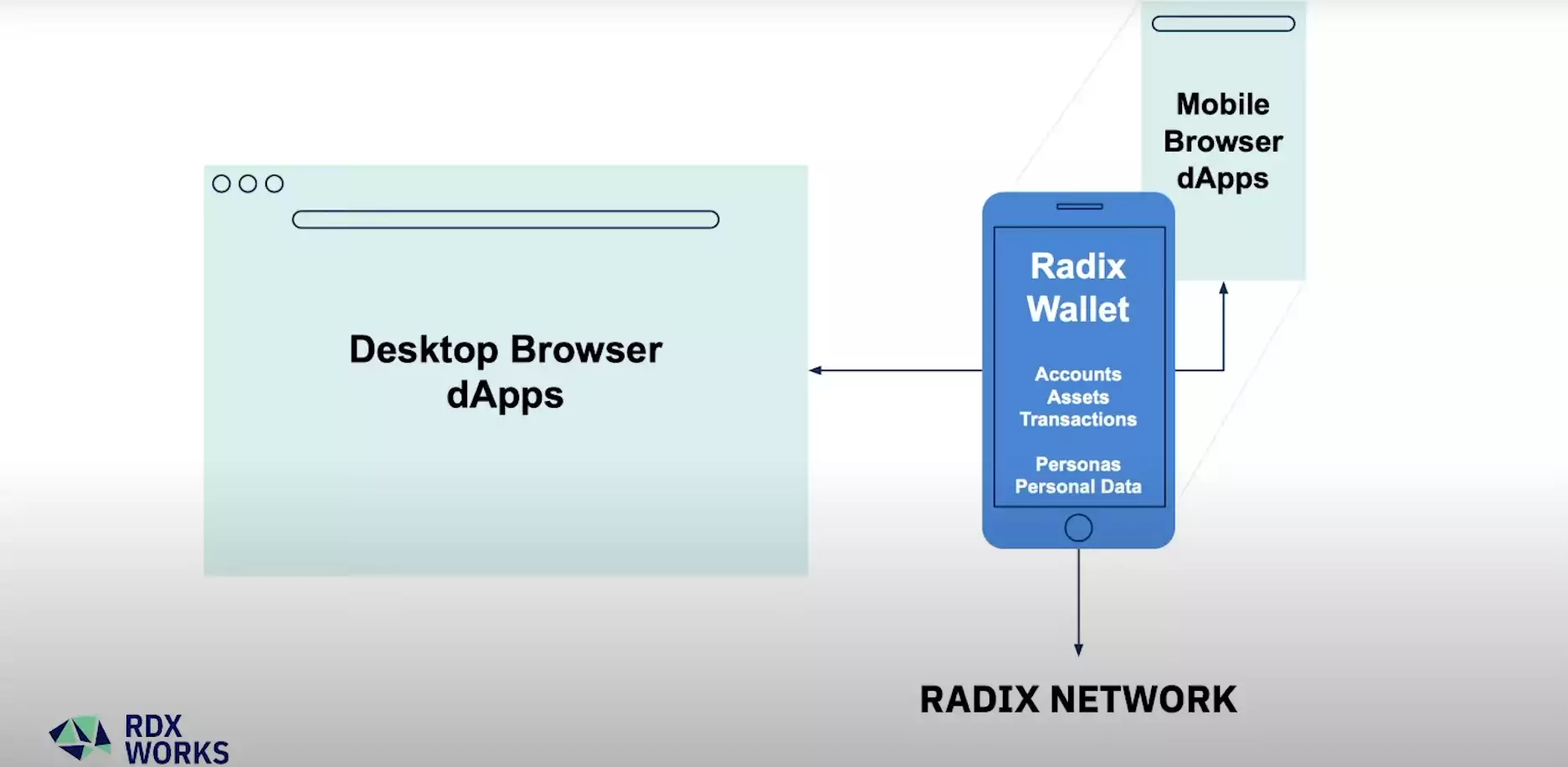
ROLA's primary function is to authenticate two aspects: a user’s login through a Persona and control of an account on Radix. It achieves this by verifying cryptographic proof of control over an Identity or Account component on the Radix Network. This process sounds promising, but it leads to critical questions. How does ROLA maintain decentralization while relying on off-ledger mechanisms? Does it potentially introduce new vulnerabilities or points of control that go against Web3 principles?
FIDO PassKeys and The Mechanics of ROLA
FIDO PassKeys
To appreciate ROLA’s approach, it’s beneficial to understand FIDO PassKeys. FIDO PassKeys, part of the FIDO Alliance’s initiatives, offer a secure, passwordless authentication method, typically used in Web2 environments. They rely on local biometric data or security keys for user verification, aiming to reduce reliance on traditional password systems, enhancing security against common threats like phishing and credential stuffing. However, unlike ROLA, FIDO PassKeys don’t inherently embrace the decentralization that is pivotal in Web3.
The Mechanics of ROLA
At its core, ROLA is akin to the FIDO PassKeys system but elevates it by leveraging the Radix Network's decentralized capabilities. This allows for the cycling of public keys used in authentication, rather than relying on static keys and cloud backups.
ROLA uses a decentralized network to refresh public keys for authentication, FIDO PassKeys are based on fixed public keys backed up on the cloud, highlighting a key difference in their approach to securing user data.
How Does ROLA Function?
ROLA's process is straightforward yet sophisticated:
Creating a Challenge: The dApp backend generates a time-limited challenge for the frontend.
Requesting Proof of Ownership: The dApp requests a cryptographic signature from the user's Radix Wallet.
User Selection: Users choose the Persona or Account(s) to authenticate.
Signature and Verification: The Radix Wallet signs the challenge, and the dApp backend verifies the information using ROLA.
Advantages of Using ROLA
ROLA's unique approach to authentication brings several advantages:
Enhanced Security: By authenticating cryptographic proof of control, ROLA ensures a secure login process.
Flexibility for Users: It allows for easy management and recovery of accounts and identities.
Decentralized Reliability: Leverages the Radix Network's robust infrastructure for secure operations.
Radix's Transaction Manifests: Transparency vs. Decentralization
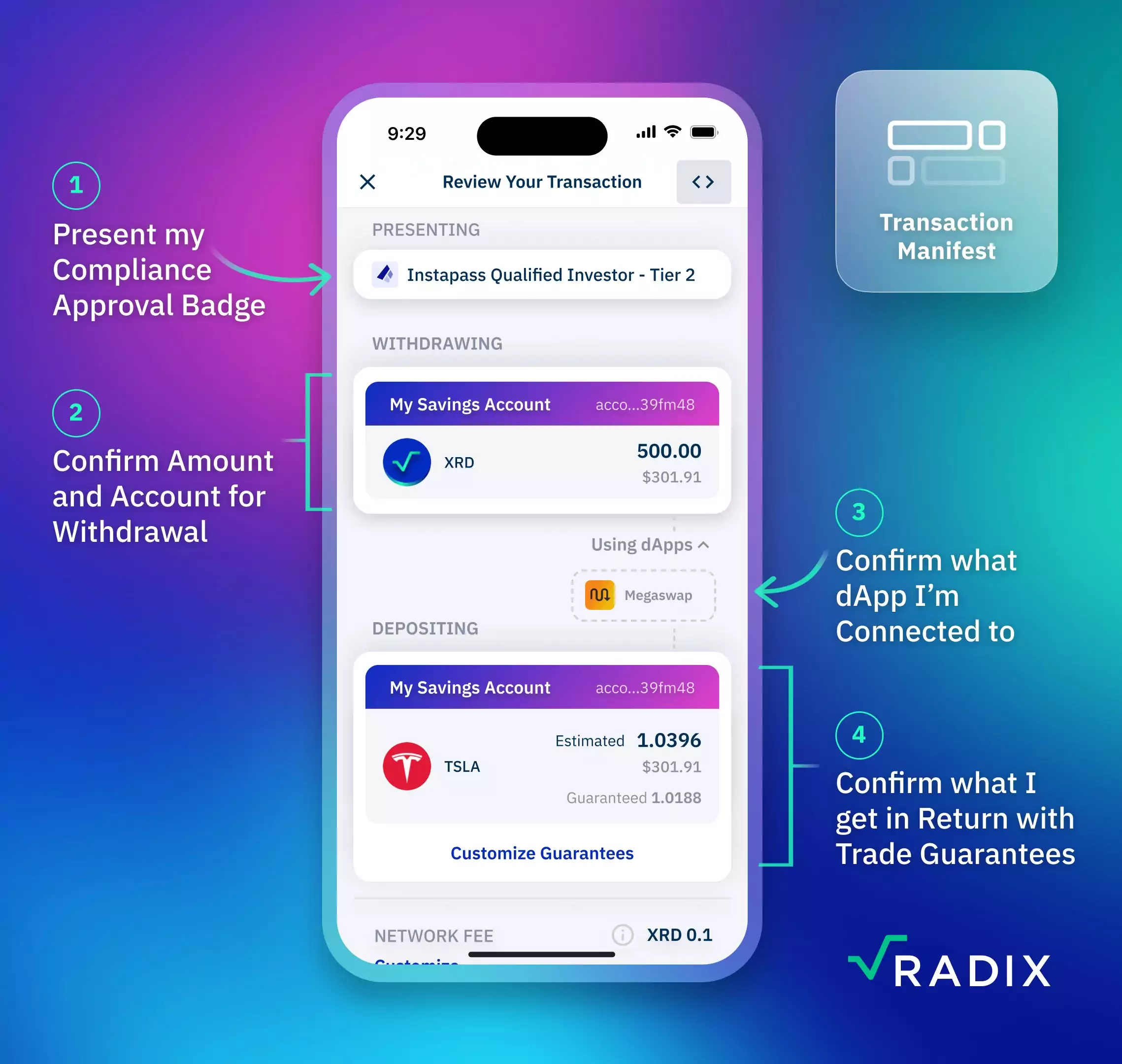
Radix also introduced Transaction Manifests, intended to clarify and simplify crypto transactions for users. This approach contrasts with typical Web3 transactions that are often seen as convoluted and obscure. While Radix's Transaction Manifests potentially offer a more transparent user experience, it's crucial to scrutinize whether this clarity comes at the expense of centralization, an aspect at odds with the ethos of Web3.
Radix's Solution: Innovative but Not Without Concerns
Radix's solution, comprising ROLA and Transaction Manifests, is undeniably innovative. It addresses key issues like unsafe wallet experiences and difficult dApp interoperability. However, this innovation doesn't come without its set of concerns. Does Radix maintain the decentralized ethos of Web3, or does it inadvertently create a reliance on its ecosystem?
Radix’s Market Presence: A Reality Check
As of now, Radix's Total Value Locked (TVL) stands at a modest 18.67 million at the moment of writing this article, with a limited number of DeFi applications. This fact underscores the nascent stage of its adoption. While Radix proposes innovative solutions for authentication and transactions in Web3, only time and broader adoption will reveal if these solutions effectively address the user experience challenges without compromising decentralization.
Conclusion: The Delicate Balance of Innovation and Decentralization
The journey to perfecting the Web3 user experience is ongoing and fraught with challenges. Innovations like ROLA and Transaction Manifests from Radix offer a glimpse into potential solutions. However, the ultimate test lies in their ability to maintain the decentralized essence of Web3 while enhancing user accessibility and understanding. The future of Web3 depends on finding this delicate balance, and only more adoption and time will determine if Radix’s approach is a step in the right direction.
The Problem with Crypto Transactions Today
At Bi·Catalyst, we specialize in engineering and developing custom software tailored to your unique needs. If you have an idea you want to bring to life, don't hesitate to get in touch. with us, and let's transform your vision into reality. Your journey to bespoke software solutions begins here with Bi·Catalyst.💡