- Updated Date

Mohamed HabbatAuthor

Navigating Blockchain Landscape Capabilities Challenges and Use Cases
Share:



Revolutionizing Digital Integrity with Blockchain
At the heart of the Web3 movement lies blockchain technology, a groundbreaking innovation that has transformed our approach to digital transactions and data security. Renowned for its decentralized architecture and reliance on smart contracts, blockchain technology has carved a niche in diverse sectors, including finance and gaming. Yet, for all its pioneering advancements, blockchain is not without certain intrinsic challenges. This exploration ventures into these limitations, shedding light on the real-world obstacles while mapping out potential pathways to overcome them.
Smart Contracts and Their Data Access Dilemma
Smart contracts are the dynamos driving blockchain transactions. They automate agreements with unparalleled efficiency but hit a snag when it comes to accessing off-chain data. Even though platforms like Uniswap and Aave illustrate the prowess of decentralized finance (DeFi), they are hamstrung by the inability of smart contracts to fetch and process dynamic data from external sources. This shortfall limits their functionality, particularly in complex financial scenarios where nuanced data analysis is indispensable.
The Query Layer Void in Web3
Web3, despite its advancements, lags behind traditional software applications in one critical aspect: a seamless query layer. In conventional systems, data retrieval, processing, and state updates are interwoven processes. However, this integral query component is conspicuously missing in Web3, placing a ceiling on what decentralized applications (dapps) can achieve and restricting the complexity of tasks they can handle.
The Oracle Issue Centralization in a Decentralized Sphere
Oracles, particularly networks like Chainlink, initially appeared as a beacon of hope, providing smart contracts with a semblance of data access. Yet, these systems falter when tasked with managing extensive datasets and inadvertently introduce a degree of centralization. This not only clashes with the decentralized spirit of Web3 but also raises security red flags, with centralized databases being susceptible to manipulation.
Zero-Knowledge Proofs and Their Scalability Struggles
In the quest for secure and trustless data verification, Zero-Knowledge (ZK) proofs stand as a beacon of potential. These cryptographic tools promise a way to verify data without revealing the data itself, offering a layer of security that's paramount in today's digital age. However, as promising as ZK proofs are, they're not without their challenges, particularly when it comes to scalability. The computational intensity required for ZK proofs often becomes a bottleneck, slowing down data processing, especially at the expansive scale of blockchain networks.
The ZK landscape is rich and varied, comprising a multitude of solutions each designed to cater to specific requirements. This diversity, while beneficial, also adds layers of complexity to the integration of these solutions into the broader blockchain ecosystem. For a deeper dive into the intricate world of ZK proofs and how they're reshaping the future of digital identity, delve into our comprehensive article The Magic Behind Zero-Knowledge Proofs.
Overcoming Real-World Obstacles with Innovative Solutions
The limitations inherent in smart contracts and oracle systems pose tangible challenges in areas like gaming and DeFi. In gaming, the integration of sophisticated reward mechanisms based on in-game actions is hindered by data integration challenges. In the realm of DeFi, the dream of embedding complex financial instruments like derivatives on-chain is dampened by the data processing limitations of smart contracts.
Hope gleams on the horizon with the advent of solutions like decentralized data warehouses and innovative protocols such as Space and Time's Proof of SQL. These advancements hold the potential to fill the missing query
layer, enabling intricate data processing while remaining true to the principles of decentralization, thus addressing many of the current limitations.
Proof of SQL Transforming Blockchain
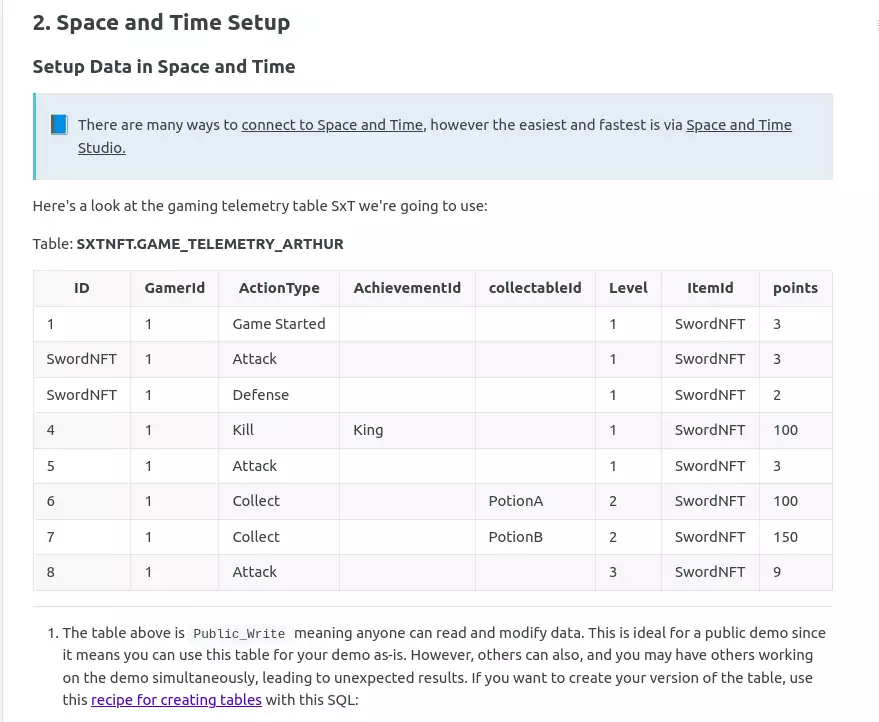
"Proof of SQL" marks a pivotal innovation in blockchain technology by Space and Time, seamlessly integrating the complexity of SQL queries with blockchain's robustness. This protocol enhances smart contracts, enabling them to execute intricate SQL queries beyond their traditional scope. Proof of SQL is a game-changer, breaking the barriers of simple logic and data handling by unlocking access to a vast array of data. It respects the decentralized nature of blockchain, ensuring the expanded data processing remains secure, trustless, and true to blockchain’s core values. This integration not only represents a significant advancement but heralds a new era of limitless possibilities in blockchain applications.
Unlocking New Possibilities with Decentralized Solutions
The emergence of decentralized data warehouses and technologies like "Proof of SQL" heralds a new era in Web3, unlocking possibilities previously constrained by blockchain and smart contract limitations.
Transforming DeFi with Advanced Financial Tools: These innovations could enable the realization of complex, on-chain financial instruments such as derivatives. Smart contracts could handle extensive market data and asset histories in real-time, making sophisticated financial operations feasible within the blockchain realm.
Revitalizing Gaming with Enhanced Rewards Systems: In gaming, Proof of SQL could dramatically alter reward distribution and asset management. It allows for more intricate reward systems that respond to a player's actions, achievements, and in-game interactions, processed securely on-chain while maintaining the platform's decentralized integrity.
Personalized Experiences on Decentralized Social Media: These technologies could significantly enhance decentralized social media platforms by enabling personalized content and interactions based on user behavior and preferences, all within a secure, private, decentralized framework.
Revolutionizing Supply Chain Management: In logistics, a decentralized data warehouse could offer real-time, tamper-proof data about the movement and condition of goods, vastly improving transparency and efficiency in supply chain operations.
Facilitating Transparent and Fair Digital Voting: In digital governance, Proof of SQL could be instrumental in creating transparent and secure voting systems. It would ensure the integrity of the voting process by allowing trustless tallying of votes within the blockchain environment.
FAQ
What are the primary limitations of blockchain technology in its current state?
Blockchain technology faces challenges such as the difficulty of smart contracts accessing off-chain data, the absence of a seamless query layer in Web3, centralization issues introduced by oracles, and scalability struggles associated with Zero-Knowledge proofs.
How do smart contracts work, and what limits their functionality?
Smart contracts automate agreements on the blockchain with high efficiency. Their functionality is limited by their inability to access dynamic, off-chain data directly, which restricts their application in complex scenarios requiring real-time data.
What role do oracles play in blockchain, and what issues do they introduce?
Oracles act as bridges, providing smart contracts with external data. However, they can introduce centralization and security vulnerabilities into the decentralized ecosystem of blockchain, potentially leading to manipulated data.
Can Zero-Knowledge proofs address data verification challenges?
Yes, Zero-Knowledge proofs offer a secure way to verify data without exposing the data itself, enhancing privacy and trust. However, they face scalability challenges due to the high computational resources required for processing.
What is "Proof of SQL," and how does it impact blockchain technology?
"Proof of SQL" is an innovation by Space and Time that allows smart contracts to execute complex SQL queries, significantly enhancing their data handling capabilities while adhering to blockchain's decentralized principles.
How can decentralized data warehouses and "Proof of SQL" transform DeFi?
These technologies enable the processing of complex financial data on-chain, paving the way for advanced financial tools like derivatives to be implemented within DeFi, thereby expanding the sector's capabilities.
What potential do these innovations hold for the gaming industry?
By enabling more sophisticated reward systems that react to players' actions securely on-chain, these innovations can significantly enhance the gaming experience within decentralized platforms.
How can decentralized solutions improve supply chain management?
Decentralized data warehouses can provide real-time, immutable data on goods movement and condition, improving transparency and efficiency in supply chain operations.
Are there any emerging solutions addressing blockchain's current limitations?
Yes, solutions like decentralized data warehouses and protocols such as
Conclusion
While blockchain stands as a transformative force, it faces significant hurdles in its current state. Understanding these limitations and actively pursuing innovative solutions is critical for the technology's evolution and broader adoption across various sectors. As blockchain matures, we can expect the emergence of more sophisticated, user-centric applications that fully exploit its potential, reshaping our digital landscape in profound ways.
source:
At Bi·Catalyst, we specialize in engineering and developing custom software tailored to your unique needs. If you have an idea you want to bring to life, don't hesitate to get in touch. with us, and let's transform your vision into reality. Your journey to bespoke software solutions begins here with Bi·Catalyst.💡