- Published Date

Mohamed HabbatAuthor

Revolutionizing Business Customer Engagement with Advanced AI Chatbots
Share:


The Dawn of Chatbots
In today's fast-paced digital world, chatbots, or as some prefer, virtual agents, have emerged as the frontline of customer interaction across various industries. Initially confined to basic text-based communication, chatbots have evolved, thanks to advancements in artificial intelligence (AI), to facilitate more complex interactions including voice and gesture commands. This evolution has expanded their role from mere customer service tools to versatile platforms enhancing organizational efficiency. Discover how these advancements are made simple with Flowise, LlamaIndex, and no-code approach.
A Glimpse into History
The journey of chatbots dates back to 1966 with ELIZA, the first attempt at simulating human conversation through a computer program. This marked the beginning of a long road of development, from simple pattern-matching algorithms to today's sophisticated conversational AI platforms capable of providing personalized, context-aware interactions. Explore more about the essence of blockchain consensus mechanisms and their impact on technology evolution.
What Sets Chatbots and Conversational AI Apart?
At their core, chatbots are programs designed to mimic human conversation, enabling businesses to automate customer interactions. But not all chatbots are created equal. The distinction between basic chatbots and those powered by conversational AI lies in their ability to understand and process human language more effectively. While basic chatbots operate on pre-defined rules, conversational AI utilizes deep learning and natural language processing (NLP) to offer a more dynamic and intuitive interaction.
The Inner Workings of Conversational AI
Conversational AI operates on two main components: Natural Language Processing (NLP) and NLU. NLP corrects user input, identifies synonyms, and breaks down sentences, preparing the text for NLU, which then determines the user's intent and extracts relevant information to form appropriate responses. This synergy enables chatbots to understand and engage in meaningful conversations.
What are Chatbot personas?
Chatbot personas are tailored conversational roles that chatbots can adopt to enhance user interaction, embodying varying degrees of interpersonal closeness, such as institutional, expert, peer, or self-dialogue roles. These personas, as researched by ETH Zurich, significantly affect the development of an affective bond between clients and chatbots, impacting user engagement and usage intentions in healthcare contexts. Designing chatbots with these personas in mind, especially in health care, can personalize and improve patient experiences, fostering stronger connections and encouraging sustained engagement with digital health interventions.
Customization and Personalization of Health Care Chatbots
The realm of health care is increasingly embracing the customization and personalization of chatbots to enhance patient experiences. These strategies, pivotal in adapting services to individual preferences or demographic characteristics, are just beginning to unfold their potential in the health care sector. Customization allows patients to proactively select from a variety of chatbot roles or design elements, thereby fostering a more meaningful and engaging interaction. This approach not only addresses the unique needs of patients but also paves the way for a new era of personalized health care delivery.
Personalization of chatbots, although in its nascent stages, has shown promising results in improving patient satisfaction, engagement, and the quality of dialogues. Incorporating these elements can significantly alter the landscape of digital health interventions, making them more responsive to the evolving needs of patients through different stages of their health journey. Such advancements underscore the importance of considering user-specific factors in chatbot design to enhance the affective bond and usage intentions. For a deeper understanding of these concepts, the study "The Effects of Health Care Chatbot Personas With Different Social Roles on the Client-Chatbot Bond and Usage Intentions" conducted by researchers at ETH Zurich provides comprehensive insights into how these strategies can be effectively implemented in health care chatbots.
The Enterprise Advantage: Features and Benefits
The adoption of AI-powered chatbots presents a multitude of benefits for enterprises, including high accuracy and resolution rates, scalability, and the ability to handle a broad scope of inquiries. These features are critical for businesses looking to enhance customer satisfaction while reducing operational costs. The power of AI in transforming customer engagement and operational efficiency is unfolding right now, as highlighted in a recent interview with Klarna's boss, underscoring the significant strides being made in the field.
For a deeper dive into the impact of AI on the tech industry and why human expertise remains irreplaceable, explore our article on why ChatGPT won't replace skilled developers.
Driving Business Value through AI Chatbots
AI chatbots are not just about cost savings; they offer a direct path to increased revenue through automated sales, enhanced up-sell and cross-sell opportunities, and improved customer service efficiency. By providing instant responses and 24/7 support, chatbots significantly enhance the customer experience.
The impact of AI chatbots on business is profound, offering:
Immediate Customer Responses: Enhancing customer satisfaction by providing quick answers to queries.
Cost Reduction: Automating customer service tasks to reduce operational costs significantly.
Revenue Growth: Utilizing chatbots for personalized marketing, thus increasing sales opportunities.
24/7 Availability: Ensuring your business is always available to meet customer needs, anytime and anywhere.
Real-world Applications From Theory to Practice
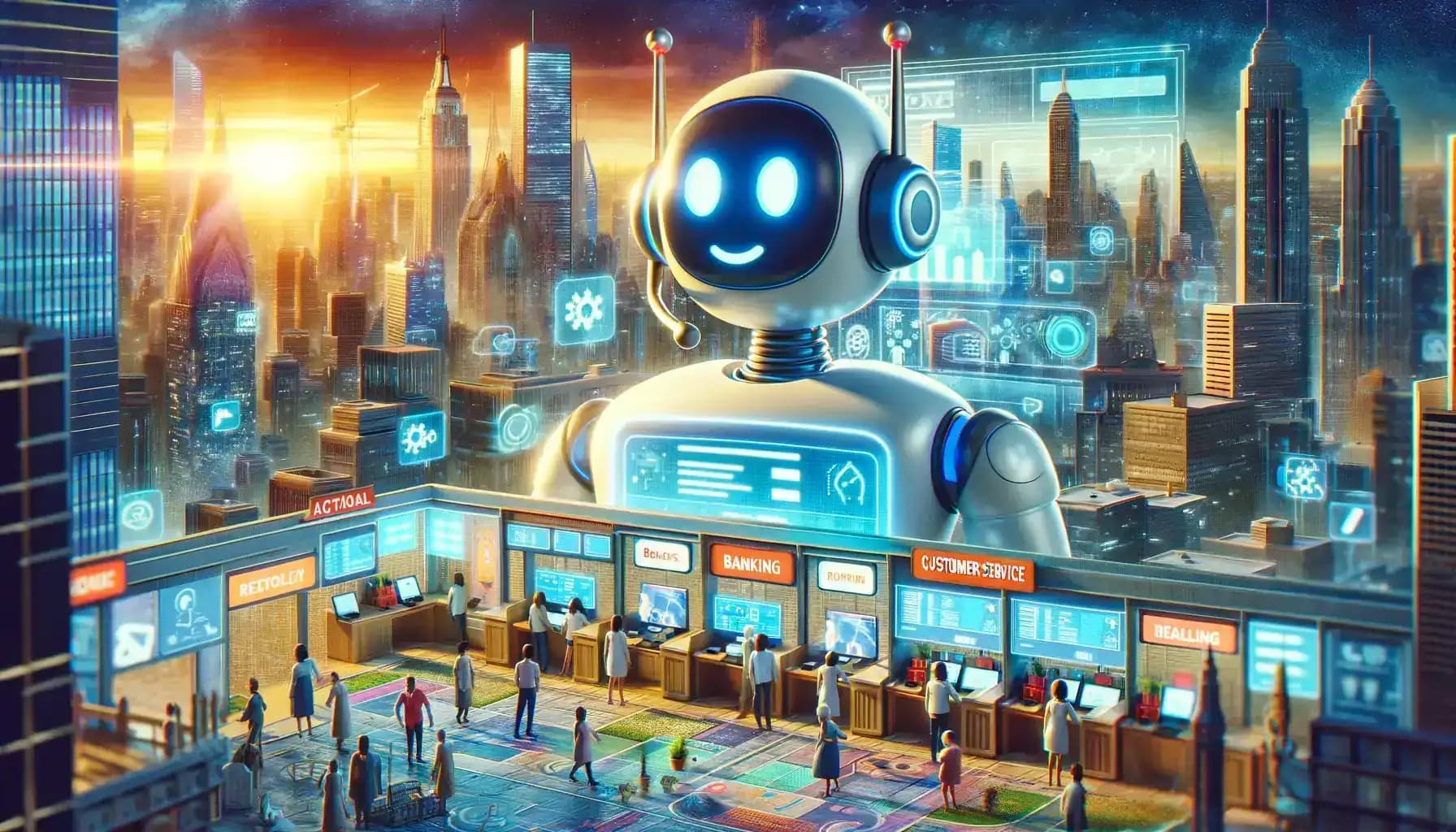
Across sectors, from banking to healthcare, chatbots are making significant impacts. They automate routine inquiries, facilitate transactions, and provide personalized customer support, illustrating the vast potential of chatbots beyond mere customer service tools.
Best Practices for Enterprise Chatbot Implementation
Successful chatbot deployment requires careful planning, clear goal setting, and alignment with business objectives. Best practices include integrating chatbots with existing customer service channels, selecting the right platform, and ensuring the chatbot is easily accessible to users.
Successfully integrating chatbots into your business strategy involves:
Choosing the Right Use Cases: Identify areas within your organization where chatbots can deliver the most value.
Clear Scope and Goals: Set specific objectives and KPIs to measure your chatbot's performance and impact.
Building a Skilled Team: Assemble a cross-functional team to oversee the chatbot's development, deployment, and maintenance.
Ensuring Visibility and Accessibility: Make your chatbot easily discoverable and engaging for users to encourage interaction.
Ethics for AI Chatbots
Transparency: Users should be aware they are interacting with a chatbot. Transparency includes disclosing the AI's capabilities and limitations and any data collection practices.
Privacy and Data Protection: AI chatbots must comply with data protection regulations like GDPR in the EU or CCPA in California. This involves securing personal data and ensuring users' privacy is respected, including how data is collected, stored, and used.
Non-discrimination and Fairness: AI chatbots should be designed to prevent bias and ensure fair treatment of all users. This requires regular audits of the AI models to identify and mitigate any inherent biases.
Accountability: Developers and deploying organizations should be accountable for the chatbot's actions. This includes mechanisms for reporting and addressing errors or misconduct.
Safety and Security: Chatbots should be secure against hacking and misuse, ensuring they cannot be exploited to harm users or compromise their information.
Conclusion: Embracing the Future
The enterprise chatbot guidebook not only demystifies the technology behind chatbots but also highlights their transformative potential for businesses willing to embrace this innovative tool. As we look to the future, the role of chatbots and conversational AI in driving business value and enhancing customer experiences is undeniable. The journey from ELIZA to today's AI-powered chatbots is just the beginning of what promises to be an exciting evolution in the way businesses interact with their customers.
At Bi·Catalyst, we specialize in engineering and developing custom software tailored to your unique needs. If you have an idea you want to bring to life, don't hesitate to get in touch. with us, and let's transform your vision into reality. Your journey to bespoke software solutions begins here with Bi·Catalyst.💡